

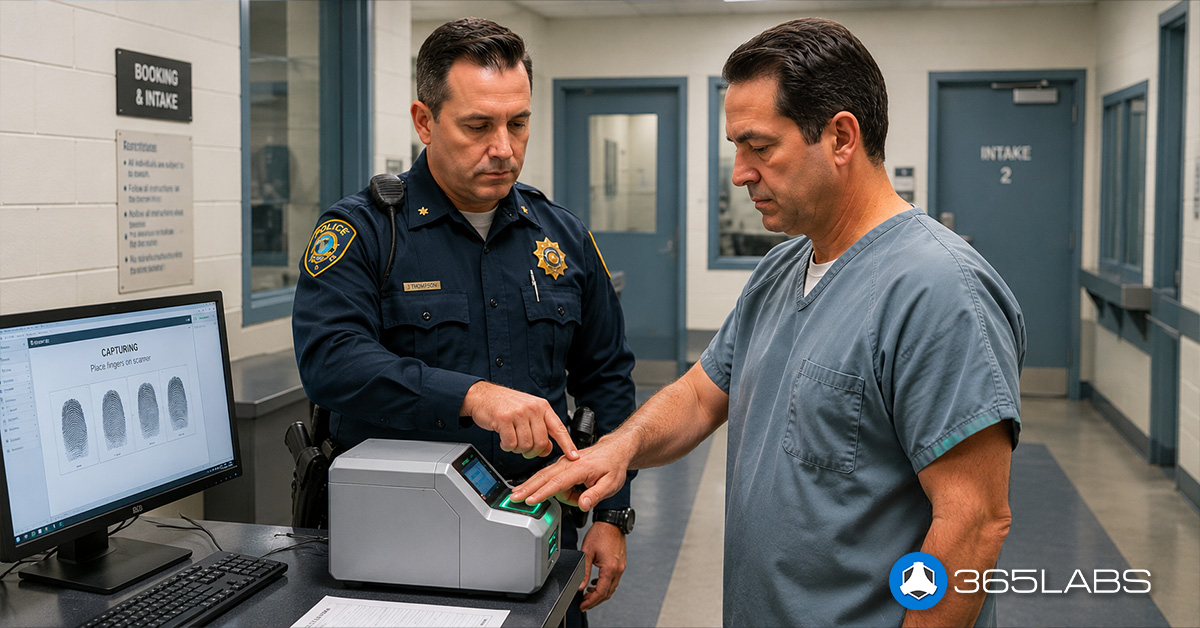
Jail intake is one of the busiest and most time-sensitive operations inside a correctional facility.
When intake runs smoothly, the entire operation benefits. When it doesn’t, delays start stacking up quickly, creating additional pressure on officers, holding areas, and overall facility operations.
These delays typically aren’t caused by one major issue; they’re usually the result of several small inefficiencies, like manual paperwork or repetitive data entry, happening over and over again throughout the shift.
The good news is that modern jail management technology can help eliminate bottlenecks through AI-assisted workflows, integration, and real-time visibility.
Bottleneck #1: Re-Entering the Same Information Multiple Times
One of the biggest slowdowns in jail intake is duplicate data entry. An arresting officer may already have entered information into RMS, only for corrections staff to manually enter much of the same information again during booking. This creates unnecessary work, increases the chance of errors, and slows down intake.
Solution: Auto-Create Bookings from RMS Arrests or Scanned Paperwork
When RMS and JMS are connected, information flows from Arrest reports into the Jail Management System automatically. Or, with tools like AI Assist in 365 JMS, officers can scan paper arrest forms, and JMS will automatically start the booking.
Instead of retyping names, charges, addresses, and demographics, corrections staff can simply review and verify the information.
Bottleneck # 2: Paper-Based PREA and Classification Forms
Many agencies still rely on paper forms for PREA screening, classification, medical questionnaires, and housing assessments, which slows down intake and creates visibility issues.
Paper packets can be misplaced, difficult to review quickly, and harder to share between shifts. Staff may also struggle to locate important alerts during emergencies or inmate transfers.
Solution: Digitize PREA, Classification, and Intake Documentation
Digital PREA and classification forms simplify the process by allowing staff to complete screenings electronically during intake.
Critical alerts, medical concerns, and classification details become immediately visible to authorized staff within JMS instead of buried in paper files. Electronic forms also create better consistency and easier audits.
Bottleneck #3: Slow Identification and Verification Processes
Accurate inmate identification is critical during intake, but manual verification processes slow booking operations. Staff may need to search multiple databases, manually compare mugshots, confirm warrants, or update inmate information individually in multiple applications. These extra steps increase the likelihood of delays and human error, especially during high-volume booking periods.
Solution: Centralize ID Verification Workflows
Integrated jail management platforms simplify inmate verification by connecting mugshots, inmate profiles, warrants, NCIC lookups and AFIS into a single workflow. Officers can instantly access inmate details, booking history, warrants and alerts from one screen instead of switching between disconnected applications.
Bottleneck #4: Poor Communication Between Departments
Intake affects more than corrections staff alone. Patrol officers, dispatchers, booking personnel, supervisors, and records staff all rely on accurate, up-to-date information during the intake process.
When departments are not working from the same information, delays and confusion follow. Officers may wait longer to clear the jail and supervisors may have limited visibility into intake activity.
Solution: Real-Time Updates Across Departments
When JMS, RMS and CAD are all connected, agency personnel automatically have access to inmate updates, warrants, and alerts across departments in real time. That means fewer phone calls, fewer misunderstandings, and better operational awareness throughout the booking process. For example, Detectives getting updated information quicker – such a aliases and tattoos – can assist in identifying suspects in open cases.
Bottleneck #5: Manual Cell Assignments and Housing Management
When housing assignments are managed manually – with whiteboards, spreadsheets, or verbal communication – this makes it harder to track available beds, classification restrictions, separation requirements, or inmate movement. These manual processes create booking delays and increase the risk of placement mistakes.
Solution: Automate Housing Visibility and Cell Assignments
When housing management is part of JMS, staff have real-time visibility into available beds, inmate classifications, keep-away alerts, and housing restrictions. Officers can make faster and safer placement decisions directly within the system while reducing overcrowding, manual tracking, and unnecessary inmate movement delays.
The Bigger Picture
Jail intake is one of the first and most important operational workflows inside a correctional facility. When intake is slowed down by duplicate entry, paper forms, disconnected systems, and manual tracking methods, the effects increase pressure on correctional staff and spread across the entire agency.
But when agencies simplify intake with a complete Jail Management System and AI-assisted workflows, delays are reduced, visibility is improved, and staff are able to focus on safety and operations instead of paperwork.
Ready to make your intake process faster, safer and more compliant? Contact us to connect with a 365Labs Public Safety consultant.
